

Thermal Spray Coatings and Surface Engineering for High-Wear Parts
Some materials used in manufacturing cannot withstand harsh environments. With over 100 years of dedicated manufacturing and metallurgical expertise, Fisher Barton delivers surface engineering solutions that dramatically extend the lifespan of your critical components. Our methodology is simple — Metallurgy Mastered. By engineering robust thermal spray coatings, we help partners in the agricultural, energy, medical, and industrial sectors reduce downtime, lower maintenance costs, and maximize overall performance.
What Is Thermal Spray?
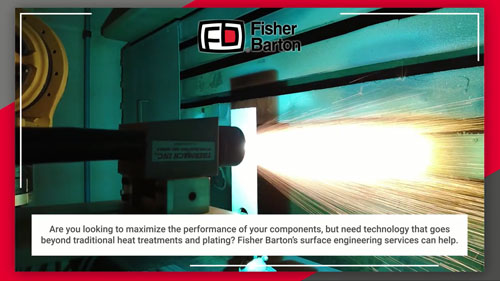
Thermal spray is an industrial coating process that provides additional protection against wear, corrosion, and high temperatures, increasing the component’s longevity. The thermal spray process involves melting feedstock materials, such as wire, powder, or rod, and propelling them at high velocities onto a prepared surface. Upon impact, the molten particles rapidly cool and freeze, building up a highly durable, wear-resistant layer.
The Advantage of Fisher Barton's Surface Engineering Solutions
Choosing the right coating method is essential for component success. Our solutions differ from those designed for delicate electronics or optical applications, such as spin coating or slot die coating, which heavily rely on precise thin-film thickness measurement. Instead, our industrial surface engineering focuses on applying thick, heavy-duty layers built to withstand extreme abrasion, erosion, and corrosion.
We take component performance to a new level by combining foundational thermal spray coating technology with advanced, proprietary heat treatment methods. This dual approach transforms raw powder, wire, and rod materials into an impenetrable barrier.
Proprietary Coating Innovations
Through rigorous research and development, our team has engineered proprietary coating solutions that significantly outperform standard application methods, providing exceptional metallurgical bonds and extended component life.
FluxFuse®
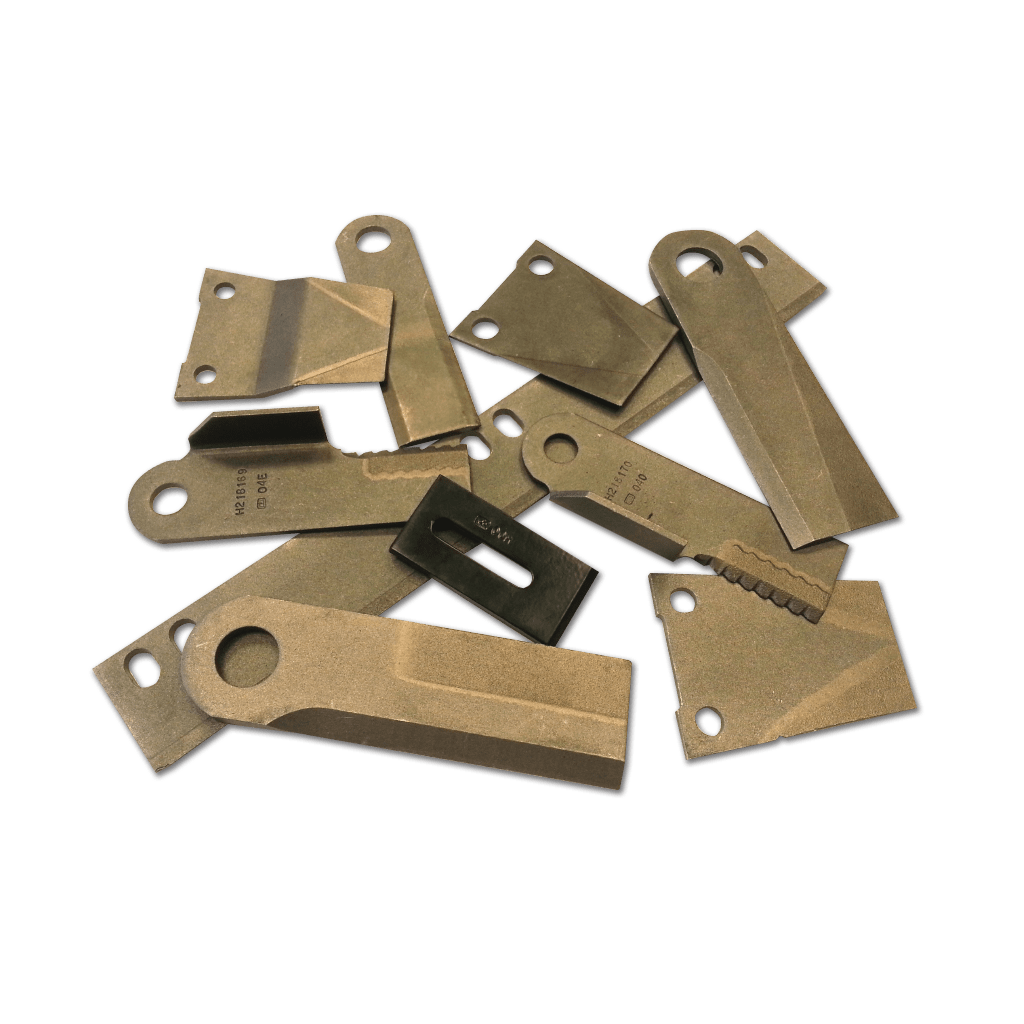
Our exclusive FluxFuse® coating process minimizes the distortion and warping commonly associated with typical open-air fusing. By providing consistent, uniform fusing conditions in a highly controlled environment, FluxFuse® ensures that wear coatings adhere flawlessly to the base material. This superior fusion results in a much stronger bond between the coating and the substrate.
When combined with Fisher Barton’s patented MARBAIN® base material, FluxFuse® offers unparalleled durability and performance for demanding agricultural and industrial applications.
Learn More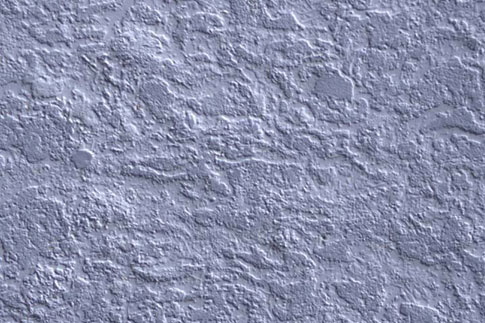
FUSIONbond®
FUSIONbond® technology is a proprietary post-coating heat-treating method performed in a meticulously controlled atmosphere. This process promotes coating diffusion directly into the component, creating a tenacious metallurgical bond while nearly eliminating coating porosity. With its high-density structure, the coating can withstand high-impact forces without chipping, delivering elite wear and corrosion resistance in the most punishing environments.
Learn More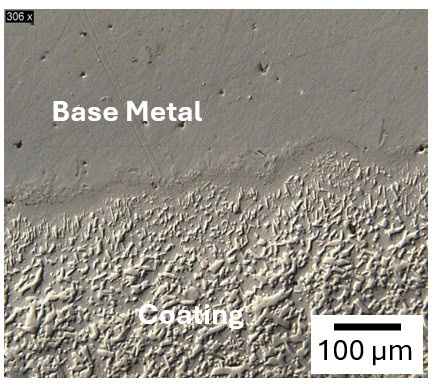
TST-163 Iron-Based Coating
Designed for extreme wear environments, the TST-163 Iron-Based Coating is a high-performance FeCrCBSi alloy. This fully metallurgically bonded coating boasts an exceptional hardness of 926 HV200g and an ultra-low porosity of less than 0.5%. Ideal for the chemical, oil, and gas industries, it consistently outperforms standard nickel-based alloys with enhanced durability, superior resistance to abrasive wear, and greater cost-effectiveness.
Standard Thermal Spray Processes
In addition to our proprietary innovations, Fisher Barton offers a versatile portfolio of standard thermal spray methods. These time-tested processes enable us to create protective layers from an almost endless variety of thermal spray materials, accommodating a wide range of industrial specifications.
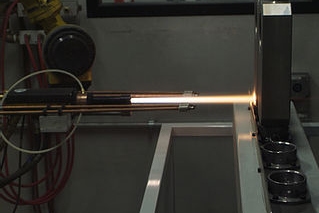
High-Velocity Oxygen Fuel (HVOF)
The HVOF process utilizes a fuel gas or liquid combined with oxygen to create a high-pressure combustion jet. HVOF generates supersonic gas velocities that heat and accelerate powder feedstock toward the substrate. The result is an incredibly dense, well-bonded coating with low porosity, perfect for components that face aggressive sliding contact and severe wear.
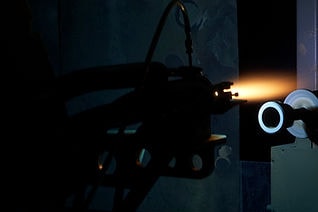
Plasma Spray
Plasma spraying utilizes a high-temperature ionized gas, or plasma, generated within a specialized plasma gun. Reaching extreme core temperatures between 11,000 and 27,000° Fahrenheit, the highest of any thermal spray method, this technology can melt and deposit almost any material, including high-melting-point ceramics.
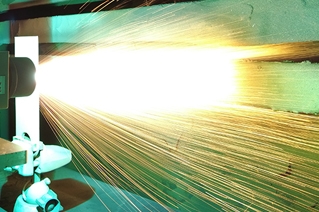
Flame Spray
Flame spraying is an economical oxyfuel process where feedstock material is fed directly into a flame, melted, and carried to the component surface via air jets. While this method produces relatively lower gas and particle velocities, which can result in higher porosity and stronger mechanical bonds, it is highly effective in a “spray and fuse” process.
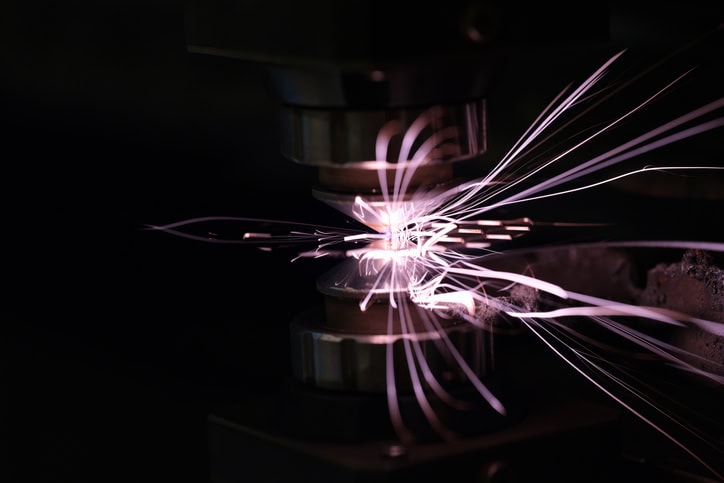
Electric Arc Spray (EAS)
Electric arc spray, or twin wire arc spraying, uses two electrically conductive wires with opposite charges. An arc is struck between the wire tips, melting the thermal spray materials, which are then atomized and propelled to the surface by compressed air. This economical, high-coverage process transfers minimal heat to the substrate.
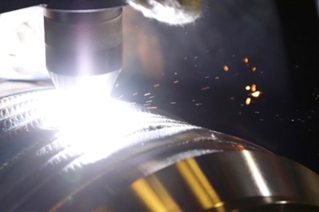
Plasma Transfer Arc - PTA
Plasma transferred, PTA, is a welding process utilizing plasma. The plasma arc is transferred to the substrate (the anode). Powder is fed into the plasma where it is heated along with the substrate which fuses the coating to the substrate. PTA welded overlays are commonly produced with iron, nickel, and cobalt based materials and in many cases hard particles such as tungsten carbides are deposited along with the conductive metal. High deposition rates are common.
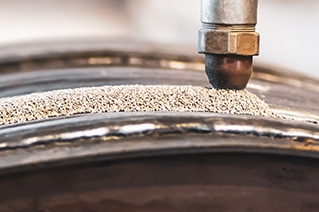
Submerged Arc Welding - SAW
The process uses continuously solid or tubular cored electrodes for the feedstock. The arc and molten metal weld are protected from the atmosphere by being submerged under a blanket of flux. Thick weld layers are produced, and weld deposit rates are high. Iron based weld layers are produced that have high hardness and good wear resistance.
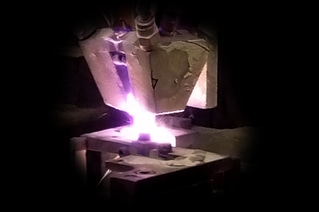
Laser Cladding
Laser cladding involves the feeding of metallic powder into a melt pool that is produced by a laser as it scans across the surface being cladded. The cladding is metallurgically bonded for excellent adhesion, and it is done with minimal heat input into the substrate. Iron, nickel, or cobalt based claddings with the addition of hard carbide phases creates highly wear resistant surfaces.
Weld Hard Face
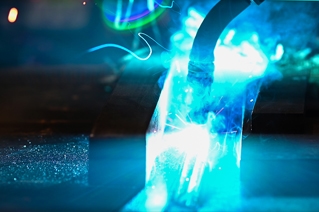
Weld hard facing is used to deposit very thick (1 to 10mm) dense layers of wear resistant materials with metallurgical bonds to the base metal. Metal Inert Gas (MIG) is a common welding process for producing weld hard faces.
Laser Cladding
Laser cladding involves feeding metallic powder into a precisely controlled, laser-produced melt pool on the component’s surface. This advanced technique produces metallurgically bonded cladding with minimal heat input, thereby reducing the risk of thermal distortion.
Plasma Transfer Arc - PTA
PTA is a specialized welding process in which the plasma arc is transferred directly to the substrate. Powder is fed into the plasma and fused to the part, offering exceptionally high deposition rates. This process commonly uses iron, nickel, and cobalt-based materials, fortified with hard particles, such as tungsten carbides, to withstand severe abrasion.
Submerged Arc Welding - SAW
Submerged arc welding utilizes solid or tubular cored electrodes. During the process, the arc and molten metal are completely protected by a granular flux blanket. SAW is highly efficient, producing thick, iron-based weld layers with rapid deposit rates, resulting in exceptional hardness and heavy-duty wear resistance.
Weld Hard Face
Weld hard facing is the process of depositing very thick layers, typically 1 to 10 millimeters, of wear-resistant material onto a component. Utilizing metal inert gas (MIG) welding, this technique creates deep, metallurgical bonds capable of enduring massive impact and continuous abrasion.
Partner With Our Metallurgy Experts
At Fisher Barton, we believe in building long-term, consultative partnerships rather than fulfilling transactional orders. By thoroughly understanding your operational challenges, our engineers deliver targeted wear-resistant coatings that prevent premature failure and keep your equipment running at peak efficiency. From comprehensive material selection to precision heat treating and flawless coating execution, our ISO 9001:2015 and ITAR-compliant facilities are ready to tackle your most complex manufacturing demands.
Experience the difference of Metallurgy Mastered. Contact our team or request a quote online today. You can also call us at 920-390-4760 to speak with an expert about our industrial coating methods.